Turnaround in the Steel and Metal Processing Industry: Why the First 100 Days Are Critical
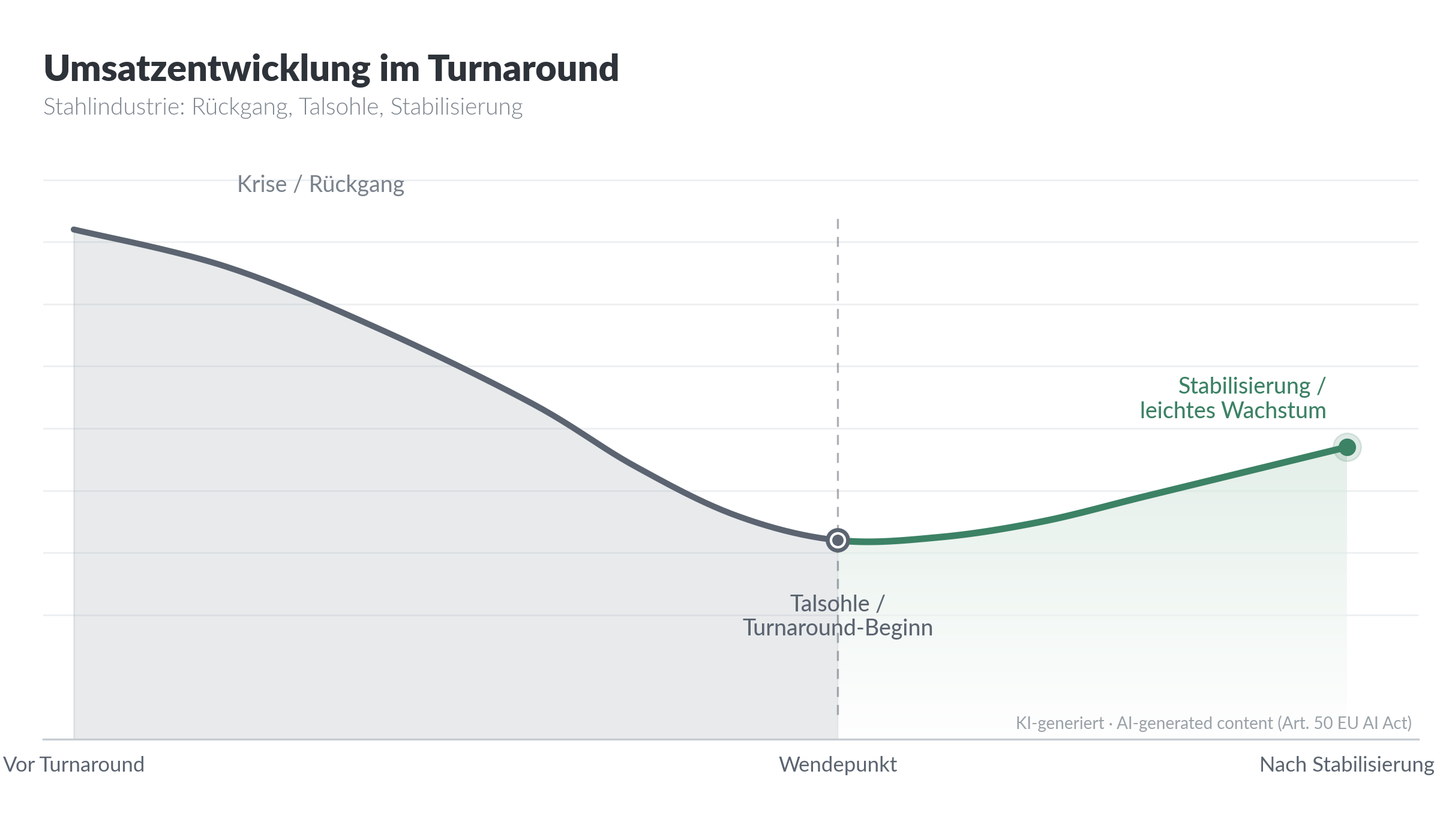
Turnarounds in the Steel and Metal Industry Are Achievable
Turnaround in the Steel and Metal Processing Industry: Why the First 100 Days Are Critical
The steel and metal processing industry is one of the most capital-intensive and cost-sensitive manufacturing sectors. In times of crisis, poor decisions tend to have a faster and greater impact than in many other industries.
For this reason, the first 100 days of a turnaround often determine whether the restructuring effort succeeds or fails.
Industry-Specific Challenges
The steel and metal processing sector is characterised by several structural challenges:
-
High fixed-cost base
- Significant investments in production facilities and high energy consumption make capacity utilisation a critical driver of profitability.
-
Cyclical demand
- Market fluctuations often amplify short-term changes in revenue and order intake.
-
Long procurement and production lead times
- Raw material sourcing and production planning reduce operational flexibility and make rapid adjustments more difficult.
-
Capital-intensive investment decisions
- Even during periods of financial distress, essential investments cannot simply be postponed without jeopardising long-term competitiveness.
What Should Happen During the First 100 Days?
Days 1–30: Liquidity and Diagnostic Assessment
The initial priority is to secure short-term liquidity and maintain business continuity.
This is followed by a structured assessment of:
- Capacity utilisation
- Product profitability
- Customer portfolio
- Cost structure
- Cash flow position
The objective is to establish a fact-based understanding of the company’s current situation before major decisions are taken.
Days 31–60: Strategic Prioritisation
The next step is to make clear strategic decisions.
Typical questions include:
- Which product lines should be expanded?
- Which business areas should be reduced or discontinued?
- Which production sites remain strategically important?
- Where can capacity be consolidated?
Within the steel and metal processing industry, these decisions frequently involve difficult choices regarding manufacturing capacity and production locations.
Days 61–100: Deliver the First Visible Results
The focus then shifts from analysis to execution.
Priority actions typically include:
- Implementing the first operational improvement measures
- Establishing performance management routines
- Creating transparency through a robust KPI framework
Key performance indicators generally include:
- Capacity utilisation
- Contribution margin by product line
- Liquidity development
- Order intake
- EBITDA performance
Early visible progress is essential for maintaining confidence among shareholders, employees, customers, and financial institutions.
Why Stakeholder Management Is Especially Important in This Industry
Restructuring projects within the steel and metal processing industry often affect production sites with a long regional tradition and a highly visible workforce.
As a result, restructuring measures receive significant attention from:
- Employees
- Works councils
- Trade unions
- Banks and financing partners
- Shareholders
- Local communities
Transparent and proactive communication with all stakeholders is just as important as the financial and operational restructuring measures themselves.
Note: Restructuring projects frequently involve employment law issues. Appropriate legal advice from specialised employment lawyers is therefore essential. This article does not constitute legal advice.
The Implications for Shareholders
A successful turnaround in the steel and metal processing industry requires clear and visible shareholder commitment from the outset.
Critical decisions—such as capacity reductions, plant consolidation, or organisational restructuring—are rarely possible without significant short-term costs.
Shareholders who establish this commitment before an interim mandate begins create the conditions for a turnaround that delivers sustainable long-term results rather than temporary improvements.